Primatologist Birutė Galdikas died on March 24, 2026
- Timothy S. Colman
- Apr 4
- 2 min read

Beautiful story about a primatologist who changed the way we understand orangutans, and ourselves as hairless apes that swim.
Primatologist Birutė Galdikas died on March 24, 2026, and an era of science that began in the forests of Tanzania, Rwanda and Borneo studying humanity’s closest living relatives more than half a century ago is coming quietly to a close. Her passing marks more than the loss of a scientist – it’s the end of one of the most extraordinary chapters in modern science.
For more than half a century, primatology had three central figures: Jane Goodall, Dian Fossey and Galdikas — often called Leakey’s Angels, after their mentor — who transformed how we understand primates and, in many ways, how we understand ourselves.
They were sent into the field by paleoanthropologist Louis Leakey, who believed that if we understood other primates, we might better understand human evolution and human nature. It was a radical idea at the time, not only scientifically but culturally. Leakey did not send large research teams or established professors. Instead, three young women went into forests, often alone, for years at a time.
What they discovered changed science and the public imagination.
Seeing chimpanzees and apes as individuals
Before the scientists’ work, primates were often described as creatures of instinct, their behavior explained largely through simple drives for food and reproduction. After their work, people began to talk about individuals with personalities, alliances, rivalries, friendships and grief.
Goodall, Fossey and Galdikas showed that chimpanzees make tools and wage political struggles, that gorillas live in complex family groups, and that orangutans raise their young with a patience and investment that rivals that of humans. The line between humans and other primates did not disappear, but it became harder to draw cleanly.
They also changed who could be a scientist.
Three women living for years in remote forests in the 1960s and ‘70s was not normal. By succeeding, they quietly expanded the boundaries of who could lead expeditions, run field sites, publish major research and become the public face of science. Many primatologists of my generation entered a field that these women forced open.
Next gen primatologist Christine Webb has a wonderful book out I highly recommend titled: The Arrogant Ape.
If you want to know my world view about our species, read Webb's important polemic.
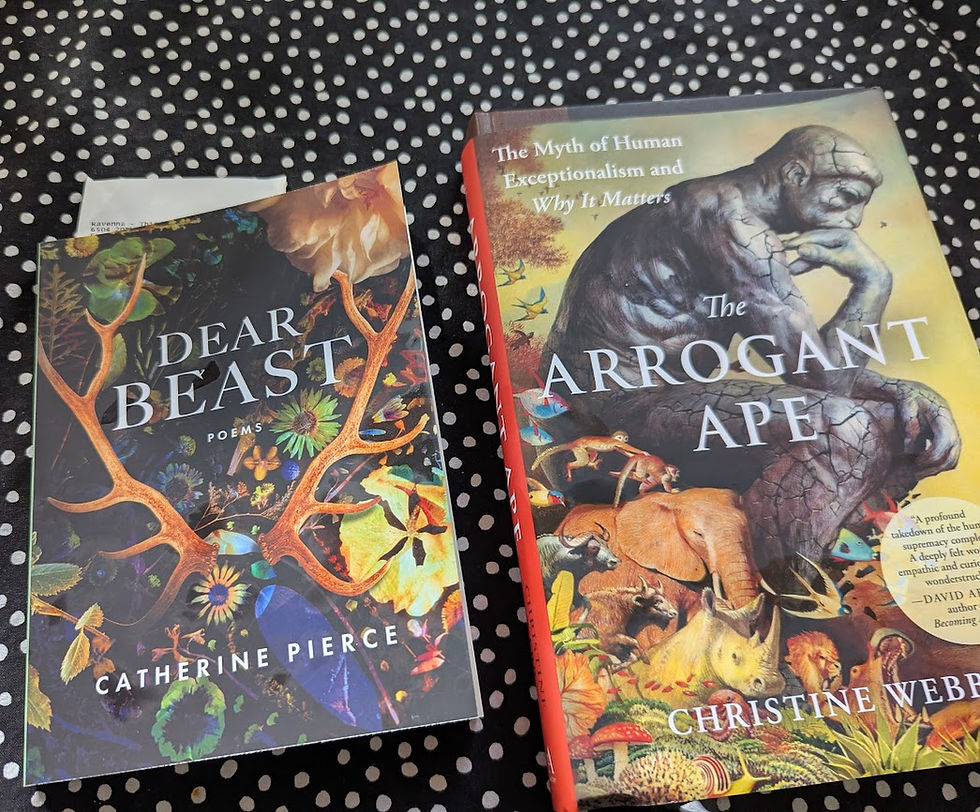
She quotes Martin Buber on her front page.


Comments